
A passion for volunteering
Lyndsey describes how her gran and mum’s dementia diagnoses inspired her to volunteer for Alzheimer Scotland’s Freephone Dementia Helpline.

Lyndsey’s story
My journey to becoming a volunteer for Alzheimer Scotland’s Freephone Dementia Helpline began way back in 1988.
That’s when I first noticed that my gran, Isabella, wasn’t her normal self. The two of us were very close and would spend lots of time together – going out shopping or taking trips to the seaside.
Gran was only in her early 60s, and I was almost a teenager, but I could see changes in how she communicated and in her balance. Gran was eventually diagnosed with dementia and passed away in 1997, the week before my twenty-first birthday. I was utterly distraught, frightened and confused because I knew nothing about the condition at that time.
After that, I researched as much as I could about dementia and went on to dedicate my free time to raising awareness and also funds for Alzheimer Scotland.
I began noticing similar changes in my mum Morag while she was still in her 50s, and she was diagnosed with vascular dementia in 2017. She’s 72 now, and her illness is quite advanced.
It was this personal experience that inspired me to volunteer for the Helpline and really channel what I’ve learned over the years to help others in a similar situation.
I went through the Helpline training which was excellent. Volunteers come from all different backgrounds and you don’t need to have any experience of dementia to take part.
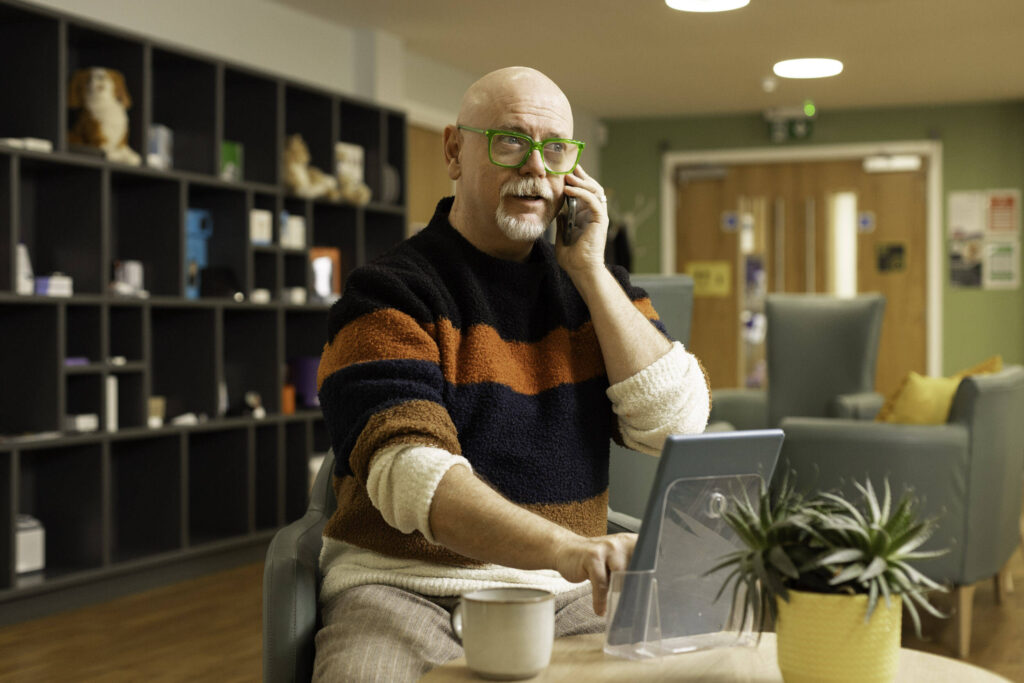
I was nervous taking calls at first but now, five years on, I’m more confident. I’m 49 now, with a demanding job and caring responsibilities for my young son and my mum, but the shifts are so flexible I can always find time to fit it in.
No two shifts on the Helpline are ever the same. You might have 10 calls each lasting a few minutes, or you could have one or two calls lasting an hour or more. People might phone up for practical information about benefit entitlements or local services, but many call for emotional support.
What I’ve learned since starting out is the importance of really listening to what the person is saying. Sometimes calls aren’t what they seem so, where appropriate, I like to ask questions to find out the deeper reason someone is reaching out.
It’s not about solving the caller’s problems for them – I try to work with the person to find the best outcome for their particular situation. It’s so rewarding when someone says you have really made a difference for them, and that they end the call feeling a bit more hopeful.
I love what I do and I would encourage anyone who’d like to help people and support a great charity to find out more about it. The training is fantastic and there is always someone to support you with any questions.
The Helpline is a vital resource that helps ensure no one faces dementia alone.
We’re looking for Dementia Helpline Volunteers
Are you emotionally resilient, honest and empathetic, adaptable, and keen to learn something new? If you are aged 18 or over and can commit to a minimum of 8 hours per month then we want to hear from you.